
News and Features
-
David Awschalom wins global Breakthrough of the Year award
David Awschalom, Q-NEXT Chief Science Officer and the Liew Family Professor of Quantum Engineering and Physics at the University of Chicago, received the prestigious Falling Walls Science Breakthrough of the Year in Physical Sciences for a pioneering body of work that broke the wall between quantum technology, molecules, and proteins. Read More
-
Helium lifts new quantum computing concept
A team led by Jacob Covey, who is part of Q-NEXT and is an Associate Professor at the University of Chicago, laid out a new concept that could turn helium’s light weight into the next generation of quantum computers. The design relies on helium-3, an isotope with different quantum properties than the helium-4 used to cool MRI machines and fill party balloons. Once built, the computer could use high-powered lasers as “optical tweezers” to capture and control individual atoms of helium. Read More
-
Researchers make materials that support quantum technology
Researchers from the University of Illinois Urbana-Champaign who are part of Q-NEXT are engineering material systems that support quantum technology. Chris Anderson and his team are developing materials for quantum transduction — the conversion of quantum information from one form to another. Elizabeth Goldschmidt, Daniel Shoemaker, and colleagues are developing quantum memory technology that stores quantum information for extended periods of time. Read More
-
Q-NEXT-developed open-source software receives 2026 R&D 100 award
SeQUeNCe, a free, open-source software developed by Argonne scientists with Q-NEXT support, is one of seven Argonne projects that received a 2026 R&D 100 Award. The SeQUeNCe software lets researchers test how quantum networks might work before building them. Read More
-
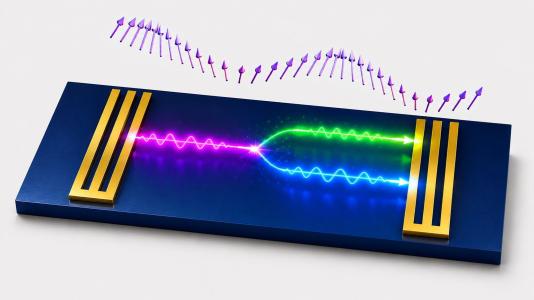
Researchers generate spontaneous magnons that synchronize with external signals
Researchers at Argonne and the University of Illinois Urbana-Champaign demonstrate a method for generating stable ripples in magnetic materials called magnons. The work opens avenues for information processing in microelectronics and quantum devices. Read More
-
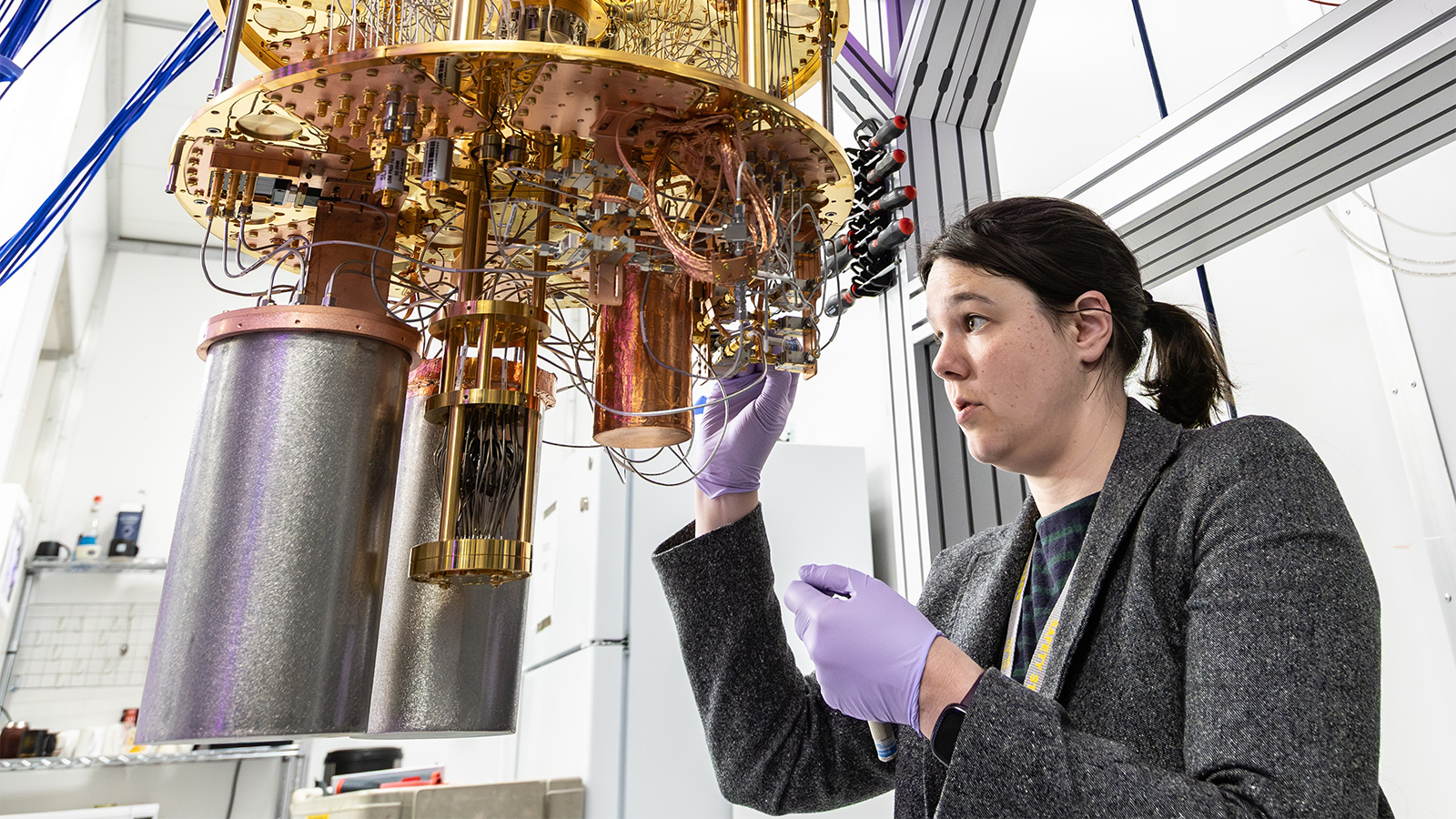
Containing multitudes: SLAC scientist collaborates to create scalable qubits
At SLAC National Accelerator Laboratory, Q-NEXT collaborator Shannon Harvey develops quantum dots — a mass-producible type of qubit. Driven by curiosity about nature and how things work, Harvey draws on her facility for working at the nanoscale. Read More
-
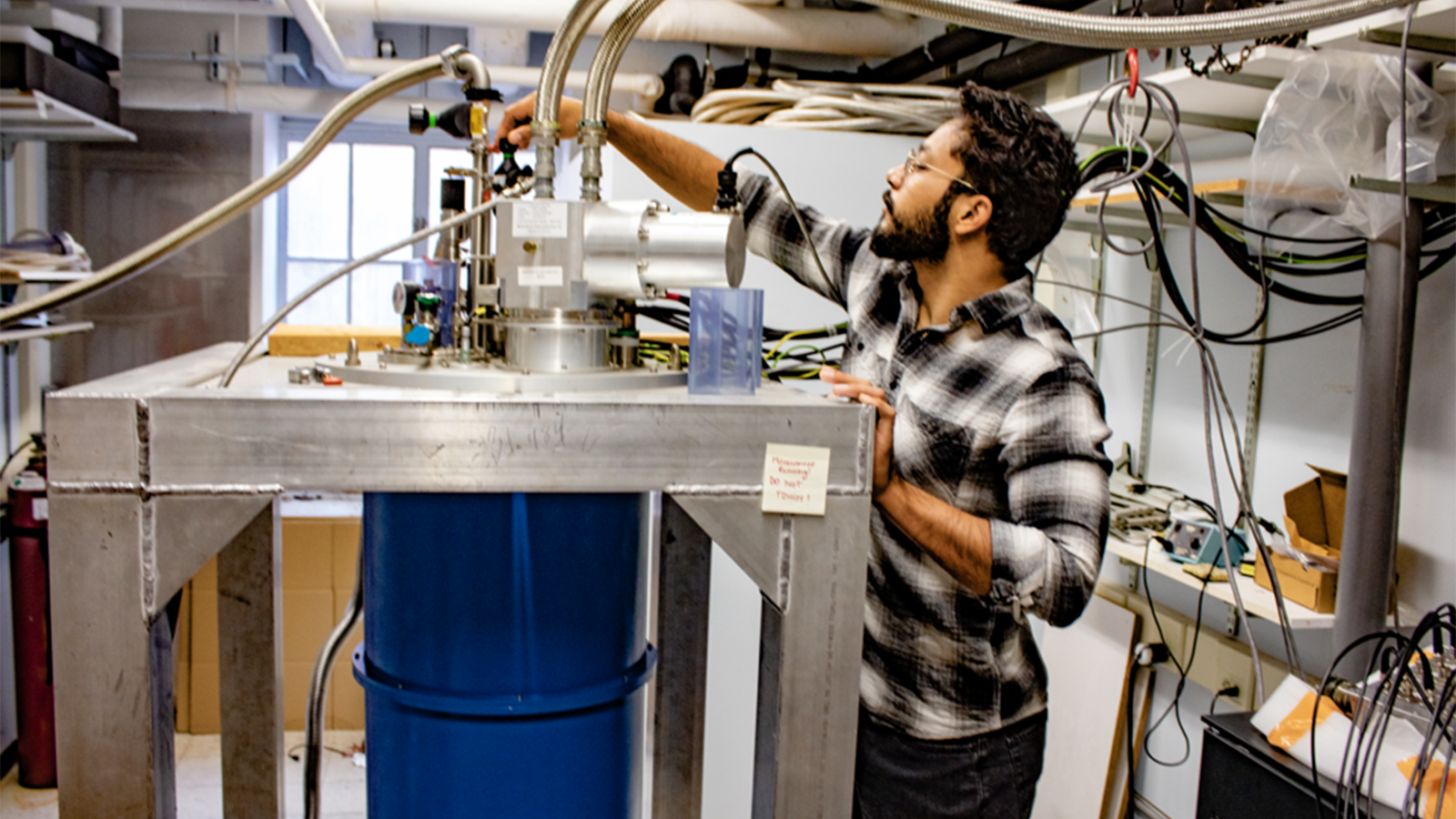
“Designer” superconducting diamond: researchers uncover path to multimodality quantum chips
Discovering the physical principles of superconductivity in diamond opens the door for scientists to use it in new quantum technologies. Read More
-
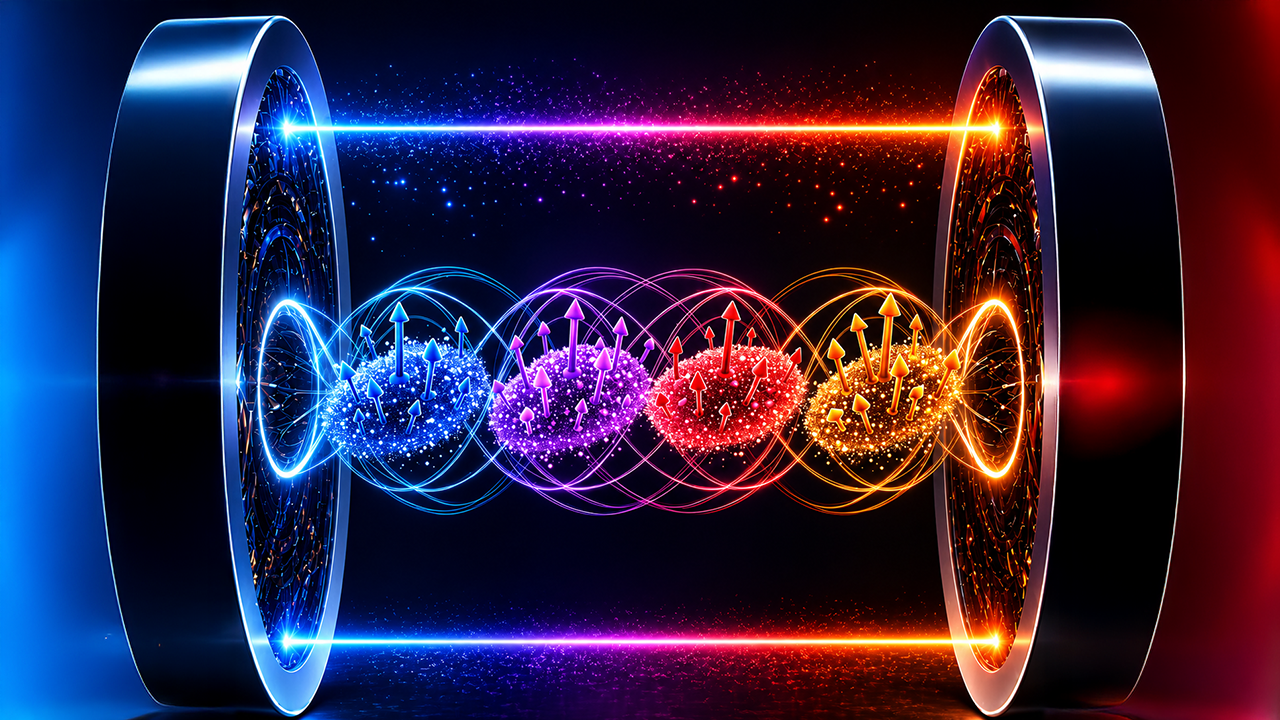
Researchers craft a new, simple recipe for highly entangled quantum states
UChicago researchers design a setup that can produce a variety of quantum states useful for ultraprecise sensing and the study of exotic quantum materials. Read More
-
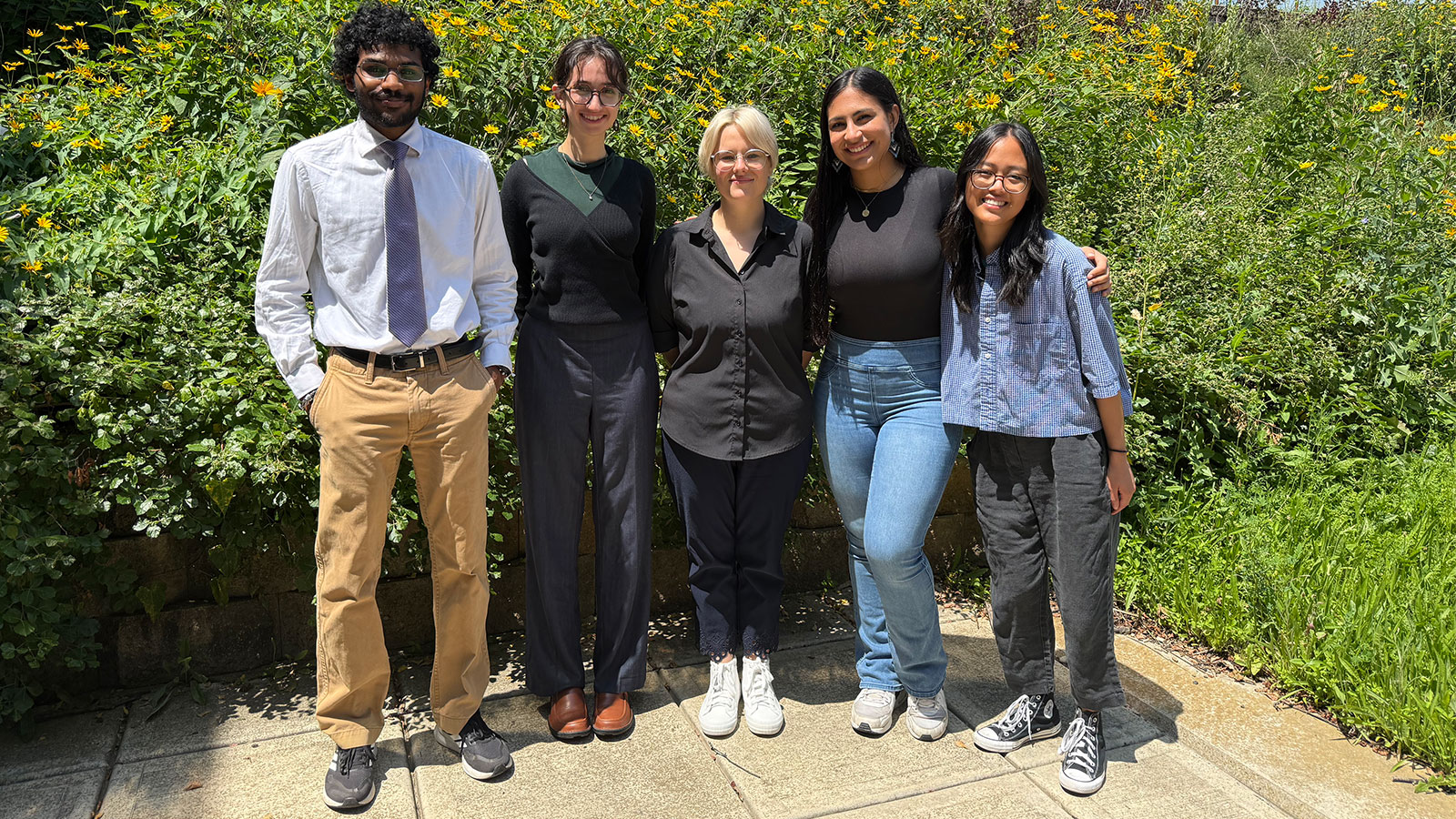
The fabulous five: Open Quantum Initiative undergraduate fellows conduct research at Argonne
Five undergraduates, countless qubits and one summer at Argonne: A summer of research ignites undergraduates’ passion for quantum information science. Read More
-

Argonne launches silicon quantum processor collaboration with Intel
In a collaboration between Argonne and Intel, Q-NEXT researchers deploy a 12-qubit processor based on quantum dots in silicon, achieving a partnership and quantum technology milestone. Read More
In the News
See all In the News-
Uncovering the hidden disorder in silicon quantum computers
From the U.S. Department of Energy: Q-NEXT researchers map the variation in materials to the atom level to scale up silicon qubits Read More
-
Neutral atom computers: the physics of Rydberg quantum gates | Mark Saffman
From 632nm: Mark Saffman, professor at the University of Wisconsin–Madison and chief scientist at Infleqtion, discusses the physics of optical tweezers and Rydberg gates, how neutral atoms perform quantum logic and create entanglement, and why this platform offers advantages in connectivity and scalability. Read More
-
Prof. Giulia Galli appointed CNRS Fellow-Ambassador
From the University of Chicago: With the appointment, Galli joins a prestigious cohort of leading figures from the world’s scientific community. Read More
-
Tuning into quantum sounds
From Caltech: Researchers at Caltech and Stanford University, including Stanford's Amir Safavi-Naeini, create tiny vibrating devices that can naturally display quantum behavior without needing an external quantum circuit. By harnessing microscopic defects already present in the material, the team achieved single-phonon nonlinear effects that could enable simpler quantum sensors capable of detecting and studying individual molecules with extraordinary sensitivity. Read More
-
Illinois touts growing quantum workforce as state shows industry leadership
From NPR Illinois: Q-NEXT Workforce Development Lead Emily Easton discusses the growing quantum education and workforce ecosystem in Illinois. Read More